The Silicon Patch Town
and the Return of the Company Store
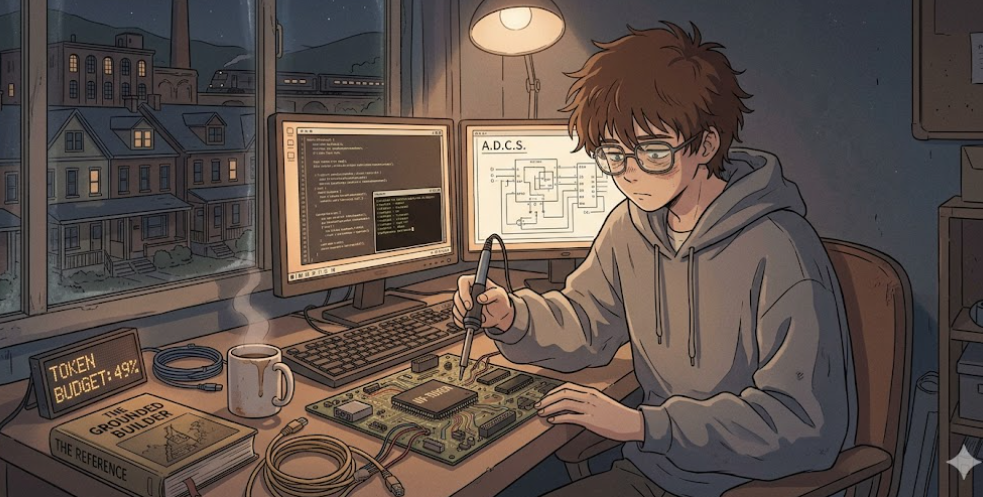
Image created with Gemini
It is 9:00 PM in Pittsburgh. I am sitting at a workbench covered in the literal guts of a project. I just finished listening to a transcript from Jensen Huang’s GTC 2026 keynote, the one where he said he would be "deeply alarmed" if a $500,000 engineer wasn’t burning through at least $250,000 in AI tokens every year. He calls it a "token budget." He compares an engineer without a massive compute allowance to a chip designer working with a pencil and paper. He calls it amplification,
I call it the smell of a new kind of coal dust. I have seen this before, not in a Silicon Valley press release, but in the history of the Pennsylvania mining valleys. We used to call them Patch Towns.
The thing in question here isn’t a new GPU architecture; it is a structural shift in how a human being’s value is calculated. Nvidia is move-testing a reality where your "compensation" isn't just liquid cash—it’s a mandatory credit line to their own infrastructure. This is the "Lethal Trifecta" of modern tech: an infrastructure trap disguised as a benefit, a massive gap in credibility, and a fundamental misunderstanding of human ethics. The Rule of Conservation tells us that for every gain, there is an exchange. In this scenario, the "gain" is the promise of 10X productivity. By tying half of an engineer's "value" to a proprietary token budget, the company ensures that the worker's "brain power" only functions within the company's walls. If you leave the ecosystem, you don't just lose a job; you lose the very "amplification" that makes you worth half a million dollars. It is a digital version of the company store, where you are paid in scrip that can only be spent at the mine you’re digging in.
The Anatomy of a Failed Monopoly
This digital retread of the Pennsylvania Patch Town is destined to fail for the same reasons the originals did:
It creates a monopsony that suffocates the very talent it tries to harvest.
In the 1890s, George Pullman lowered wages while refusing to lower rent in his company houses, trapped workers in a closed-loop economy they couldn't afford to leave. Today’s "Token Salary" does the same by removing professional mobility; if your wealth is denominated in compute credits, you cannot take that value to a startup or a competitor. You become a specialist in a vacuum. Furthermore, these systems prioritize a fragile efficiency over long-term resilience. Just as coal towns like Nemacolin collapsed when the world shifted to oil because they had no external economic DNA, an engineer who only knows how to build within a specific corporate API becomes obsolete the moment the industry moves to a new architecture. Eventually, workers reject this kind of paternalism. History shows that when the first major market (tokens/compute) crashes or a company devalues its own credits to stay solvent during a recession, the illusion of "empowerment" will shatter. The company will choose its own survival over the engineer’s "budget," leaving the builder with nothing but useless digital scrip and a set of skills that don't work outside the valley.
The Human Lesson
This isn't about being against AI. It’s about who owns the intent. We are currently in a messy, blackened stage of tech history where the individual is being dissolved into a "token consumer." The industry wants to turn your intellect into a metered utility. They claim this empowers the creator, but it’s a closed-loop accounting trick designed to keep the capital from ever leaving the valley. A machine is only as good as the human intent behind it. If you are just a "token burner" pushing buttons on a black box you don't understand, you aren't a creator you’re a tenant. Real work requires "dirt under the fingernails." It requires understanding the plumbing of the system so that when the API goes down or the "token budget" is cut, you still have the skill to stand on your own two feet.
True literacy in this new age isn't about how much compute you can command or how much syntax you remember; it's about the judgment and intent you bring to the tool.
Don’t let your professional worth be denominated in a currency you don't own. If your ability to produce is entirely dependent on a corporate credit line for tokens, you have surrendered your sovereignty. Build your own stacks. Run your models locally whenever the hardware allows. Understand the hidden exchanges happening every time you hit "generate." If you don't understand how the tool works, the tool is actually working on you.
Understand the exchange. Do the work or don't post it.
