Western Pennsylvania
From The Rust Belt to the Era of Data
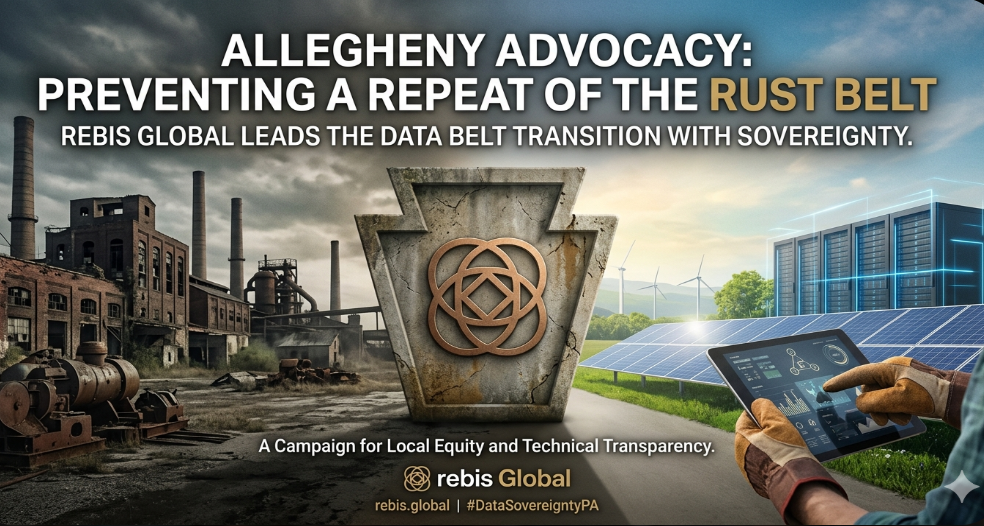
I was driving past the Cheswick Power Station Click to open side panel for more information in Springdale the other day. For decades, those massive stacks were the tombstone of the industrial age—a towering reminder of a time when the Allegheny River was the lifeblood of a world built on coal and soot. But the stacks are gone now, and in their place, a new kind of foundation is being poured. It’s happening all up and down the Allegheny and the Monongahela. The Rust Belt is being gutted and refitted, but we aren't making steel anymore. We’re building high-density AI data centers. The very things that made Pittsburgh the center of the world in 1920 massive access to water and a powerhouse energy grid are exactly what the digital age needs to keep the machines cool and the lights on. The old-world industrial roots are taking hold again, but this time, the smoke has been replaced by the low, constant hum of server racks. It is a fascinating, almost poetic inversion of history, but as someone who has spent years in the "dirt under the fingernails" reality of this region, I see the wary edge that comes with it.
The Lethal Trifecta
We’re at a crossroads where we risk falling into the same trap that hollowed out the Mon Valley fifty years ago.
To quote Einstein, we cannot solve our problems with the same thinking we used when we created them.
If we aren't careful, we’re going to suffer from a new industrial lethargy born from a failure of intent. The old paradigm was purely extractive: companies took the coal, took the labor, and when the efficiency dropped, they left behind a hollowed-out shell. If we treat data and power like we treated steel, we end up with what I call Digital Sharecropping. In this scenario, we provide the land, the water, and the strain on our local power grid while the actual wealth the insights and the digital sovereignty is exported to boardrooms in Silicon Valley.
We cannot afford to let the gain be concentrated elsewhere while the local community is left with the unscripted consequence of rising utility costs and a handful of security guard jobs. We’ve seen this movie before, and we know how it ends if we don't change the script.
The Shift
This is where we have to practice a form of radical acceptance. Whether we want them here or not, they are coming. The flow of tech is like the river itself; you can’t stop it, you can only hope to channel its energy. If we don't house these centers on our banks, they will simply move to the next town over that will, and we will lose our seat at the table entirely. In my personal philosophy. We have been in the dark phase the blackening and decay of the old mills for a long time. But to reach the perfected work, we have to change the nature of the exchange. For every gain, a price is given or taken, and we must ensure that the price these companies pay includes a direct investment in our neighborhood reclamation. We aren't looking for a handout; we are looking for a balanced exchange where our natural resources and legacy infrastructure are traded for localized power, high-speed connectivity, and the right to own our digital future.
Fostering the New Growth
If we do the work and hold these companies to a higher standard, the potential for a healthy boom is massive. This isn't about painting a picture of a high-tech utopia where robots solve all our problems while we sit idle. It’s about a functional renaissance.
When you have the most advanced compute power on the planet sitting in your backyard, the entire economic gravity of the region shifts.
We are already seeing Pittsburgh become a global capital for robotics and automation, anchored by the work at Carnegie Mellon University and a network of over 250 deep tech companies. But the establishment of centers like the Homer City Generating Station and the specialized facilities at Iron Mountain Click provides the actual engine for that growth. Imagine a local tinkerer or a startup founder in a garage in the valley who no longer has to rely on distant, expensive cloud servers because the infrastructure is right here.
This localized resource can drive a multiplier effect that supports skilled trades, revitalizes school districts with new tax revenue, and gives our kids a reason to stay and build here rather than exporting their talent to the coast.
We have a chance to turn these grey boxes into a shared utility that breathes life back into the valley.
The Standard
The companies that once said they didn't need the internet for advertisement or operations are ghosts now. To quote Mark Cuban, in this era, you’re either mastering the tool or you’re becoming irrelevant. This is a living truth that applies to our communities just as much as it does to businesses. We must house these giants on our banks, but we must do so on our terms. We provide the cooling water and the legacy grid, but in exchange, they must provide the path to the future for our families. This requires us to move past the old-world mentality of just being glad someone offered us a job. It requires us to be the architects of our own sovereignty, enforcing policies that ensure these centers are integrated into the community rather than just walled off from it. The machine is only as good as the human intent behind it, and our intent must be to rebuild our home into something stronger and more resilient than it ever was. Do the work or don't post it.
If we do the work and hold these companies to a higher standard, the potential for a healthy boom is massive. This isn't about painting a picture of a high-tech utopia where robots solve all our problems while we sit idle. It’s about a functional renaissance. When you have the most advanced compute power on the planet sitting in your backyard, the entire economic gravity of the region shifts. We are already seeing Pittsburgh become a global capital for robotics and automation, anchored by the work at Carnegie Mellon University and a network of over 250 deep tech companies. But the establishment of centers like the Homer City Generating Station Click to open side panel for more information and the specialized facilities at Iron Mountain Click to open side panel for more information provides the actual engine for that growth. Imagine a local tinkerer or a startup founder in a garage in Tarentum who no longer has to rely on distant, expensive cloud servers because the infrastructure is right here. This localized resource can drive a multiplier effect that supports skilled trades, revitalizes school districts with new tax revenue, and gives our kids a reason to stay and build here rather than exporting their talent to the coast. We have a chance to turn these grey boxes into a shared utility that breathes life back into the valley.
The Standard
The companies that once said they didn't need the internet for advertisement or operations are ghosts now. To quote Mark Cuban, in this era, you’re either mastering the tool or you’re becoming irrelevant. This is a living truth that applies to our communities just as much as it does to businesses. We must house these giants on our banks, but we must do so on our terms. We provide the cooling water and the legacy grid, but in exchange, they must provide the path to the future for our families. This requires us to move past the old-world mentality of just being glad someone offered us a job. It requires us to be the architects of our own sovereignty, enforcing policies that ensure these centers are integrated into the community rather than just walled off from it. The machine is only as good as the human intent behind it, and our intent must be to rebuild our home into something stronger and more resilient than it ever was. Do the work or don't post it.
Would you like to explore more about the specific Community Benefit Agreements being discussed in the Pennsylvania legislature, or should we look into other local data center projects?
